Text by
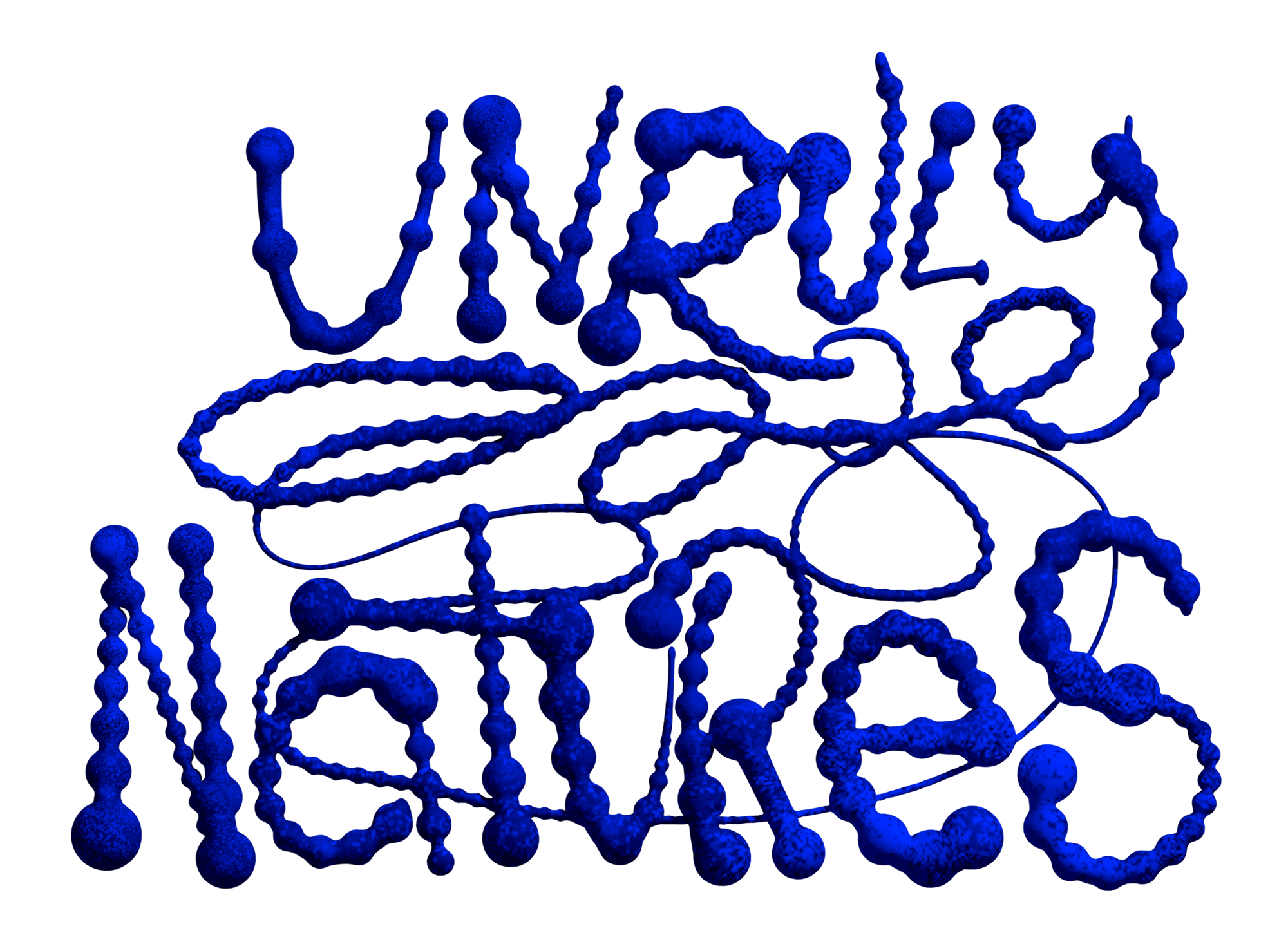
Sophie Gosselin, Illustration by Christoph Miler
︎
November 16, 2026
The Earth is trembling beneath the feet of old Europe. Ecosystems are being transformed, borders are shifting, territories are entering into migration. Thus opens the era of terrestrial uprisings.
Roya Valley, on the edge of the Italian border, October 2nd, 2020: the passage of Storm Alex swept away everything in its path, causing an unprecedented flood of the river and its tributaries, drowning entire villages, destroying bridges and roads, redrawing the lines of the landscape from top to bottom. As one of the residents puts it: “One morning you get up and a whole lifetime of labour is wiped out. You become a climate migrant.”1 The inhabitants of the Roya suffered the same fate as those migrants who, coming from Africa or the Middle East, cross the border separating France from Italy to find refuge in the Valley. With one difference: after having fled wars, violence, poverty or climate disasters, these exiles are hunted down by the police, brutally returned to the borders of a Europe transformed into a fortress in the name of "national security". To escape the drones and police checks, the migrants form an alliance with the territory, divert the administrative borders and draw the map of a new political geography whose stage is the mountains, the forests and the waterways: at the scale of the Valley, the inhabitants have set up a reception network,2 transforming the border zone into a zone of encounter and solidarity.
As they themselves experienced during the storm, mutual aid is the only truly effective response to the upheavals of an erupting Earth. Living-with and not against: this is the simple truth these inhabitants teach us, but the European states, those colossi with feet of clay, seem unwilling to hear, endangering the lives of all those who, today and tomorrow, will face the consequences of climate disruption.
In the conflict between the securitarian politics of a Europe of declining nation-states and the hospitable cosmopolitics of a community of inhabitants living with the upheavals of an unstable Earth, what is at stake, on a small scale, is no doubt the destiny of Europe as a whole.
In the Roya Valley, two borders cross. Each promises Europe a different future. First, the political border separates the French state from the Italian state, but it also separates Europe from Africa and the Middle East, erecting itself as a dam between human beings and their natural territory. This border materialises the modern political project of a Europe of Nations, that Europe which, while denying the colonial past on which it was built, daily casts out to its margins the heirs of the peoples whose dispossession it has historically organised.
Let us retrace in broad strokes the history of this modern Europe. The signing of the Treaties of Westphalia in 1648 marks a major turning point in the formation of the modern international political order, founded on the confrontation of sovereign states equal in law. These treaties marked the transition from an imperial regime subordinated to the authority of the Church to a new political order founded on territorial sovereignty, which would progressively take the form of the nation-state. The Treaties of Westphalia thus lie at the origin of the elementary principles of contemporary international law, such as the inviolability of borders and non-intervention in the domestic affairs of the State. But one part of this history is all too rarely told: the emergence of this new international order was contemporary with the first wave of colonial expansion, replaying in the colonised territories the carving-up of borders that was taking shape within old Europe. Yet these colonial borders are neither secondary nor contingent to the formation of the Europe of Nations. Quite the contrary: this formation, and the international order it founds and imposes on a planetary scale, can only be understood on the basis of the wars of colonial conquest.3
Modern Europe was built, from the outset, around a double border, the second coming to extend and secure the stability of the first: an internal border within European territory and an external border of the colonised countries where the national powers confronted one another.4
For the emerging power of the nation-states rests entirely (economically but also ideologically) on the domination of the colonised peoples and territories. Economically, because the production of goods and the enrichment of nations depend on the pillage and unlimited exploitation of the natural and human resources of the colonies.5 Ideologically, because the colonial border is also a racial border, organising the submission and domination of peoples considered "savage", conflated with a nature itself posited as an otherness to be conquered in the name of "civilisation". The modern State, that great Leviathan, is the collective-scale replica of that male and white "Man" who defines himself in opposition to "Nature", to woman and to the black man, reduced to the status of things that can be appropriated and exploited.6 The "national" project therefore attempts to give flesh to this cold monster of cogs and mechanisms.7 Immanuel Wallerstein and Étienne Balibar have analysed the operation of constructing this "fictive ethnicity" (which is no less effective for being fictive) that lies at the foundation of the nation.8 The latter designates the form taken by communal cultural identity within the modern State — a cultural identity that has historically given itself as a principle of political unity.9 Access to citizenship (and therefore the capacity to be recognised as a full political agent) depends on belonging to the nation. The modern concept of “people” constitutes the political operator of this articulation, promising equality to whoever would be its member.
However, this democratic equality only very belatedly concerned the majority of the inhabitants of French territory. Only under repeated pressure from popular uprisings did modern democracy gradually widen to include, beyond the minority of property-owners who held censitary suffrage, the “common people” and, very recently, women.
Non-nationals, even if they have long lived on the territory and participate in its economic life, remain excluded. One could see in the advent, over the course of the twentieth century, of the formation of a political European Union, an attempt to deconstruct this bond between citizenship and nation in favour of widening the democratic political space beyond the state-national border. Yet today, more than ever, this attempt is proving a failure, and it is up to us to think it through.
Indeed, how are we to understand that the project that was meant to allow us to move beyond the nationalist conflicts that led to the two world wars is resulting in a forceful return of nationalist fantasies and of the xenophobic violence that accompanies them?10 If the choice of a European construction taking the form of a common economic market11 is without doubt one of the important causes of this failure, it cannot by itself explain it. The rise in power of the reactionary forces of which Europe, and the world, are today the stage, seems to me to find a decisive cause in one of its fundamental unthoughts: the fact that the internal border of the European states finds its foundation and its stability in the external border of the colonised territories. By failing to think through and confront its colonial past and its structural role in constructing modern Europe, the latter condemned itself in advance.
Thus, instead of erasing the borders within Europe, the Union project has on the contrary multiplied them, fragmenting its own territory from within: either by renewing internally the relations of domination between colonising states and colonised states (as was the case for Greece in 2015),12 confirming the dynamic of the “tropicalisation of the world”;13 or by creating a situation of global apartheid, both internal and external, plunging into insecurity an ever-growing share of the world population, reduced to illegality, penned into camps, enslaved or hunted down by militias and states14 of the South complicit in a maintenance of the global order whose most vulnerable members are its first victims.
The hypothesis I wish to defend in this short text is that the current failure of the European Union project does not stem only from the absence of a properly political construction of Europe, but that it resides at the very root of the modern European project structured around the double national and colonial border, and that only the invention of a new political geography capable of moving beyond this double border will be able to respond to the challenges that the present and coming times hold in store for us.
To do this, we must set out again from another place, from another border than the one historically fixed by the pen of the national powers. This border does not separate two nation-states, France and Italy, but follows the course of another geopolitical division, delimiting the contours of a shifting and meandering territoriality: the one drawn by the river Roya.15
Taking its source in the Tende Pass, it reaches the Mediterranean at Ventimiglia, forming a bridge between France and Italy, between land and sea, and sketching the Valley's singular contours and watershed. Far from erecting dams between humans and their milieus, the watershed's lines open paths to another possible Europe. Within it, inhabitants reinvent the conditions for a cosmopolitan hospitality that can welcome other humans as much as other-than-humans, and learn to live with and within migrant territories.
Calling territories "migrant" implies two things. First, it takes into account the reality of the consequences of climate disruption. For today, the Earth as a whole has entered a phase of migration. The Earth on which the modern nation-states were erected is rising up under the repeated assaults from an economic system that rests on the pillage and capture of its vital powers. What certain scientists call the Anthropocene, to name the destabilisation and destructuring produced by a conquering humanity upon the Earth-system, marks above all, and perhaps first of all, the entry into the time of the Geogene:16 the time of a terrestrial upheaval and regeneration that carries away in its convulsions the configurations of the old world, opening the way to a general recomposition of ways of dwelling.
One of the concrete translations of the Geogene no doubt lies in the scale of the human and other-than-human migrations that are currently redrawing the face of the Earth from top to bottom: migrations of animal species, of plants, of forests, of human beings, accompanying the recomposition of terrestrial geographies due to the melting of glaciers, the shifting of the Gulf Stream or the rise of the waters.17
From this general upheaval it is necessary to draw the political consequences. At this level, speaking of “migrant territories” presupposes noting how climate disruption transforms our ways of dwelling and forming community, obliging us to rethink traditional forms of political action. It will no longer be a question of postulating, as the moderns did, a passive and mute nature available for the exclusive appropriation of human communities, nor a stable earth that could be sectioned off and administered as one administers a factory. It is henceforth a question of learning to live with the shifting, plural dynamics of an Earth rendered unstable. And what better than water expresses the meaning of this vast “entry into migration”? For water is not only the condition of possibility for the renewal of all forms of life. Like the cardiovascular network that distributes to our vital organs the oxygen and nutrients indispensable to their life, the hydrographic network constitutes the vehicle that transports living beings, that irrigates the lands and traverses terrestrial bodies in order to link them to one another within plural and living body-territories: from the glacier to the river, from the source to the estuary, from the lands to the sea, from the clouds to the forests, from the rain to the water tables…
Water links bodies, territories and continents. It draws borders other than those instituted arbitrarily by modern nation-states: zones of encounter and transition from which it is possible to relearn how to form community and weave new alliances between humans and other-than-humans.
If modern politics has essentially defined itself from the sovereign gesture of a division of the lands,18 that is, from a terrestrial and colonial vision of space, what is sketched here could be called hydropolitics, thereby designating a political action that envisages its forms of territorialisation from the cycles of the waters and the way these cycles draw the new territories of the common. By “hydropolitics” I do not therefore simply mean the strategies of water governance (which most often remain prisoners of a terrestrial/sovereign conception of the political) but the ways of making a people and of forming community from the living territories that watersheds are.19 Not the politics of "dikes" and “dams” but a politics of flows, of migrations and of intercultural and multispecies alliances. It is, in some sense, a matter of reconnecting with the deep meaning of the image of a blue planet, of an Earth where the oceans, seas, lakes and rivers represent 75% of the total surface.
From the riverbed would thus be born the bodies and organs of a new geopolitics, inaugurating the possibility of a democratic and diplomatic reinvention. For if the river constitutes a form of border, its function is not first and essentially to exclude, that is, to define identity (of the State, of the nation) through the exclusion or domination of an otherness (nature, women, foreigners), as was the case for the type of border defined by the modern states. The border that the river forms must rather be envisaged as a threshold — a zone of passage and transition — within which the space of a collective and shared reappropriation of a relational culture can open and articulate itself: the site of emergence of situated cosmopolitan and multispecies communities, woven from all the threads that nourish them and give them life.
In the wake opened by the river, new ways of dwelling and of making a people would thus emerge: peoples of the water, peoples of the mountains or peoples of the forests. To imagine the forms and operative modes of such a hydropolitics would amount to thinking the conditions (material and spiritual) from which these inhabiting communities could become aware of and take into account the various scales of interdependence that contribute to the vitality of their life-territory, and to build, at the local, regional and interregional level, the instances of cooperation that support and sustain them.
The qualifier "bioregion", as defined by the American essayist Kirkpatrick Sale, seems pertinent for thinking the territorial unity of such a hydropolitics: “a life-territory, a place defined by its life forms, its topographies and its biota rather than by human diktats”.20
The stakes, then, are neither to relocalise the global nor to globalise the local so long as both take as their model the politics of states and national borders, but to think and articulate the plurality of scales of political action from the dynamics of re-inhabitation of territories and the chains of vital interdependence they bring into play: to make possible the stratification and territorialised entanglement of a plurality of ways of dwelling and of world-making. For if the world of the fisherman depends on the existence of the fish he catches, the two share at once a common world and differentiated worlds. If the fish is an eel, its world depends not only on the health of the river where the fisherman lives and navigates, but also on the Gulf Stream or the Sargasso Sea, where it returns to be reborn anew.
The river is a place where a plurality of entangled worlds coexist, each depending on the others to exist while deploying its own singularity. Relational culture partakes of a plural identity, chimerised by the encounters that are its hearth.
What holds for species also holds for human cultures. Knowledges and gestures that come from elsewhere can thus renew and reactivate the knowledges and gestures forgotten or buried here, just as the seeds that birds carry from one continent to another contribute to the renewal of ecosystems. As an inhabitant, each person sits at the intersection of multiple worlds, caught in a multiplicity of relations of attachment and interdependence that, woven together at the scale of a watershed and between watersheds, contribute to territories' vitality.
Rivers thus draw the contours of zones of transition, encounter, and mutual transformation: hearths of situated pluriverses.
Contrary to a “rearmed”21 Europe for war between nations, the aim is to give birth, from these transition zones that rivers are, to a Europe of watersheds. And, in so doing, to move from confrontation to agonistics,22 from the death-dealing duality of a political conception that opposes friend to enemy to a terrestrial cosmopolitics conceived as a dynamic and collective weaving of the alliances and interdependencies between life-territories. The political stake of a “good government” consists henceforth in accompanying these mutations by creating the frameworks and spaces for a diplomatic reinvention of the practices and forms of cohabitation within and between watersheds: between the Roya Valley, the Vésubie Valley and the region of Nice, between the Alpes-Maritimes and the province of Imperia, between the Côte d'Azur, Piedmont and North Africa, between the Alps and the Rhône, between the Rhône and the Loire… Not a politics that sets out from on high, from a commanding and groundless vantage point, but a politics that sets out from the territories and restores to the inhabitants the capacity to negotiate and invent their collective forms of life. A politics of solidarity between bioregions taking the form of popular assemblies of watersheds and bioregional confederations.
Like the inhabitants of the Roya Valley creating networks of mutual aid to face the storm, it is by reweaving, in the very fabric of life-territories, new forms of solidarity and cohabitation, that it will be possible to give body and consistency to a living and enduring Europe: to a Europe of the united watersheds.
This new political geography is already beginning to emerge wherever communities rise up and organise to defend and care for their rivers, their forests, their mountains, demanding the recognition of rights for the ecosystems within which they live or asserting their attachment to the multiplicity of beings with whom they people their life-territory. In recent years, several political initiatives have flourished, such as the Parlement de Loire, the Assemblée populaire du Rhône, the Parlement de la Creuse, the biovallée of the Drôme, or the Syndicat de la Montagne Limousine. In the wake of these new institutional dynamics, the need gradually emerges to invent a space of encounter and dialogue that accompanies the recomposition of these political territorialities and the Europe they help make. The recent creation of a Diplomatic Council of River Basins in the Lake Geneva (Léman) territory in Switzerland,23 where four of Europe's great river basins converge (Rhône, Rhine, Danube, Po), constitutes an attempt to respond to this necessity. Alongside the United Nations Organisation — located in Geneva — where the modern nation-states gather to decide on global policies, the Diplomatic Council of River Basins intends to open a path towards the invention of a terrestrial geopolitics capable of responding to the challenges of an Earth in migration.
Footnotes
1 1 Words of Jean-Pierre Cavallo, sheep farmer, cf. https://reporterre.net/Vallee-de-la-Roya-quand-la-catastrophe-a-tout-detruit-apprendre-a-revivre.
2 Let us cite here the names of three local associations that work daily to welcome exiles: Roya Citoyenne, Défends Ta Citoyenneté and Emmaüs Roya.
3 Hannah Arendt, L'impérialisme (vol. II of Les origines du totalitarisme), Fayard, 1982. [Eng. ed.: Imperialism: Part Two of The Origins of Totalitarianism].
4 Tassin, Étienne. “La traversée des frontières. L'Europe entre identités et migrations”, Raison publique, vol. 19, no. 2, 2014, pp. 105-123.
5 Cf. Philippe Colin and Lissell Quiroz, Pensées décoloniales, Une introduction aux théories critiques d'Amérique latine, Zones, 2023, p. 132.
6 Silvia Federici, Caliban et la sorcière, Femmes, corps et accumulation primitive, Entremonde and Senonevero, 2014.
7 Thomas Hobbes, Le Léviathan.
8 See É. Balibar and I. Wallerstein, Race, nation, classe. Les identités ambiguës (1988), Paris, La Découverte, 2007.
9 Ernest Gellner, Nations et nationalismes, Paris, Payot, 1989.
10 Of which the very recent “immigration law” voted in France under the aegis of the Macron government is a paradigmatic example.
11 In line with the credo of liberal ideology, which holds that (and this runs counter to the entire history of the formation of the international market) commercial exchange would bring peace by creating relations of dependence between nations. Yet the common market has rather led to reproducing and amplifying, within Europe, the dominations engendered everywhere in the world by the development of capitalism.
12 When Europe, under the aegis of Germany, contested the vote of the Greek people by imposing on it, from outside, a policy of economic austerity. This historical moment undoubtedly constitutes a decisive turning point in the European project, putting a definitive end to any idea of an emancipatory and egalitarian Europe.
13 Ricard Lanata, Xavier. La tropicalisation du monde. Presses Universitaires de France, 2019. The book's thesis is that today the globalised North is undergoing what a certain disaster capitalism has been inflicting on the Souths for several centuries, and of which the colonial experience is the truth: a privatisation of the social sphere of immense violence, which provokes a tribal and identitarian withdrawal.
14 This is how France subcontracts the control of migrations to African states such as Senegal. cf.: https://www.lemonde.fr/afrique/article/2023/09/06/comment-l-europe-sous-traite-a-l-afrique-le-controle-des-migrations-1-4-frontex-menace-la-dignite-humaine-et-l-identite-africaine_6188169_3212.html. At the end of January 2024, the Italian government of Giorgia Meloni (far right) reached an agreement with Albania to build camps for delocalising migrants rescued at sea. These two camps will be managed by Italy, on the territory of a country that is not part of the European Union (EU), and should accommodate up to 3,000 migrants arriving in Italy by sea.
15 Let us recall that the establishment of the Franco-Italian border dates from 1860, after which the first controls on those crossing this zone took place. Yet, as the historian Tombaccini-Villefranque notes: "it is interesting to point out that the establishment of the border in the Roya valley, separating territories united for centuries, could not stop customary migrations and that, consequently, in the presence of provisions aiming to prevent them, they would take place despite the repressive arsenal." Cf. Helene Mazin. Épreuves de l'exil et solidarités de proximité: Ethnographie de l'accueil des exilés dans la vallée de la Roya (2017-2020). Thèse de Sociologie. Université de Lyon, 2022, p. 28.
16 Cf. Sophie Gosselin and David gé Bartoli, La condition terrestre, habiter la Terre en communs, éd. Seuil, 2022.
17 As the French Office for Biodiversity (Office français de la biodiversité) indicates, “climate change is contributing to modifying the living conditions of species, forcing them to migrate and adapt their way of life. These migrations, like the tiger mosquito moving northwards, can induce new health risks (transmission of diseases) and imbalances in the food chain.” cf.: https://www.ofb.gouv.fr/le-changement-climatique. See also “Migration des espèces, la révolution silencieuse,” by Jonathan Lenoir, https://courier.unesco.org/fr/articles/migration-des-especes-la-revolution-silencieuse.
18 Carl Schmitt, Le nomos de la Terre, PUF, 2001.
19 A watershed is a territory that drains all of its waters towards a common outlet, a watercourse or the sea. The watershed is bounded by natural borders: the ridgelines or drainage divides. On either side of these lines, the waters of precipitation and springs, as well as all dissolved or suspended elements (sediments, pollution…), flow towards separate outlets.
20 Cited by Agnès Sinaï in Réhabiter le monde, Seuil, 2023, p. 10.
21 Expression used by President Macron at the press conference at the Élysée on 16 January 2024, following the government reshuffle.
22 For a deeper treatment of the concept of agonistic politics, see La condition terrestre, habiter la Terre en communs, Sophie Gosselin and David gé Bartoli, Seuil, 2022.
23 This project was initiated within the framework of a residency by David gé Bartoli at Utopiana in Geneva between 2022 and 2024, with the companionship of Sophie Gosselin, Marin Schaffner, Anna Barseghian and Stefan Kristensen. It now federates a plurality of local actors of the Léman watershed and European actors working collectively on the construction of this instituting process. See the manifesto “For a Diplomatic Council of River Basins”.